

Here's a weird thought experiment. You learned to walk around age one, barefoot, on whatever floor your parents had. Your feet figured it out. No arch support. No cushioning. Just skin on ground, and somehow, you nailed it.
Fast forward a few decades. Your feet have spent most of their life stuffed inside padded, elevated, narrow shoes that quietly took over the job your muscles were supposed to do. So why barefoot shoes? Because your feet already had the hardware. The shoes just switched it off.
The Hidden Mechanics of How Conventional Shoes Reshape Your Body Over Time
Picture a conventional shoe as a cast you never asked for. Not one a doctor prescribed, but one you picked off a shelf and strapped on every morning since you were five.
That raised heel? It tips your pelvis forward. The arch support basically tells your foot muscles to clock out. And the narrow toe box crams your toes into a wedge shape that, honestly, looks nothing like an actual human foot. Give it a few years. Your calves get shorter. The small muscles in your feet go soft. Your balance quietly erodes.
Nobody really brings this up, but think about it: you're taking somewhere between 6,000 and 8,000 steps a day. Every single one of those steps rehearses whatever pattern your shoe forces. That's not training. It's moulding.
What "Barefoot" Actually Means (Hint: It's Four Specific Design Decisions, Not a Vibe)
"Barefoot shoe." Sounds like an oxymoron, right?
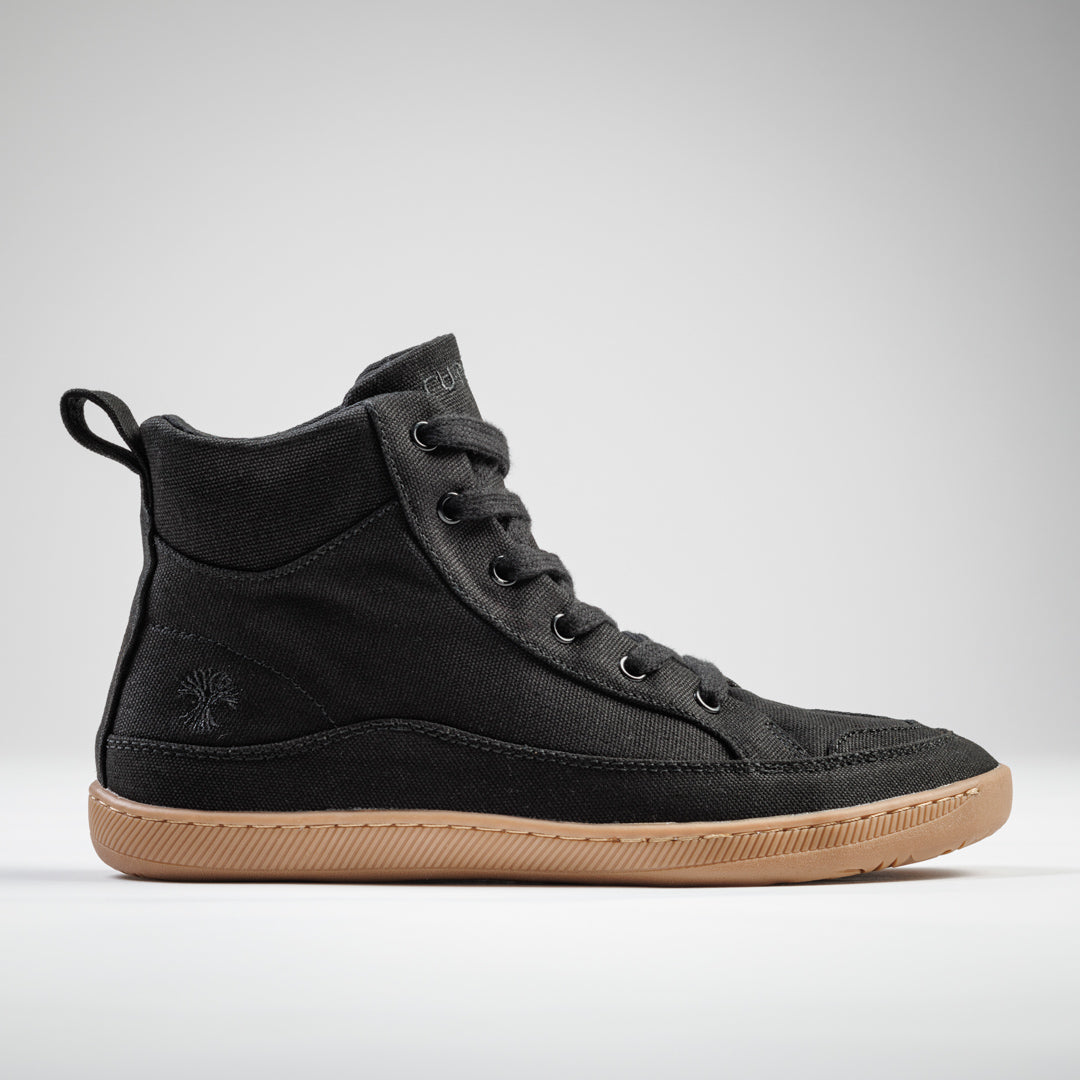
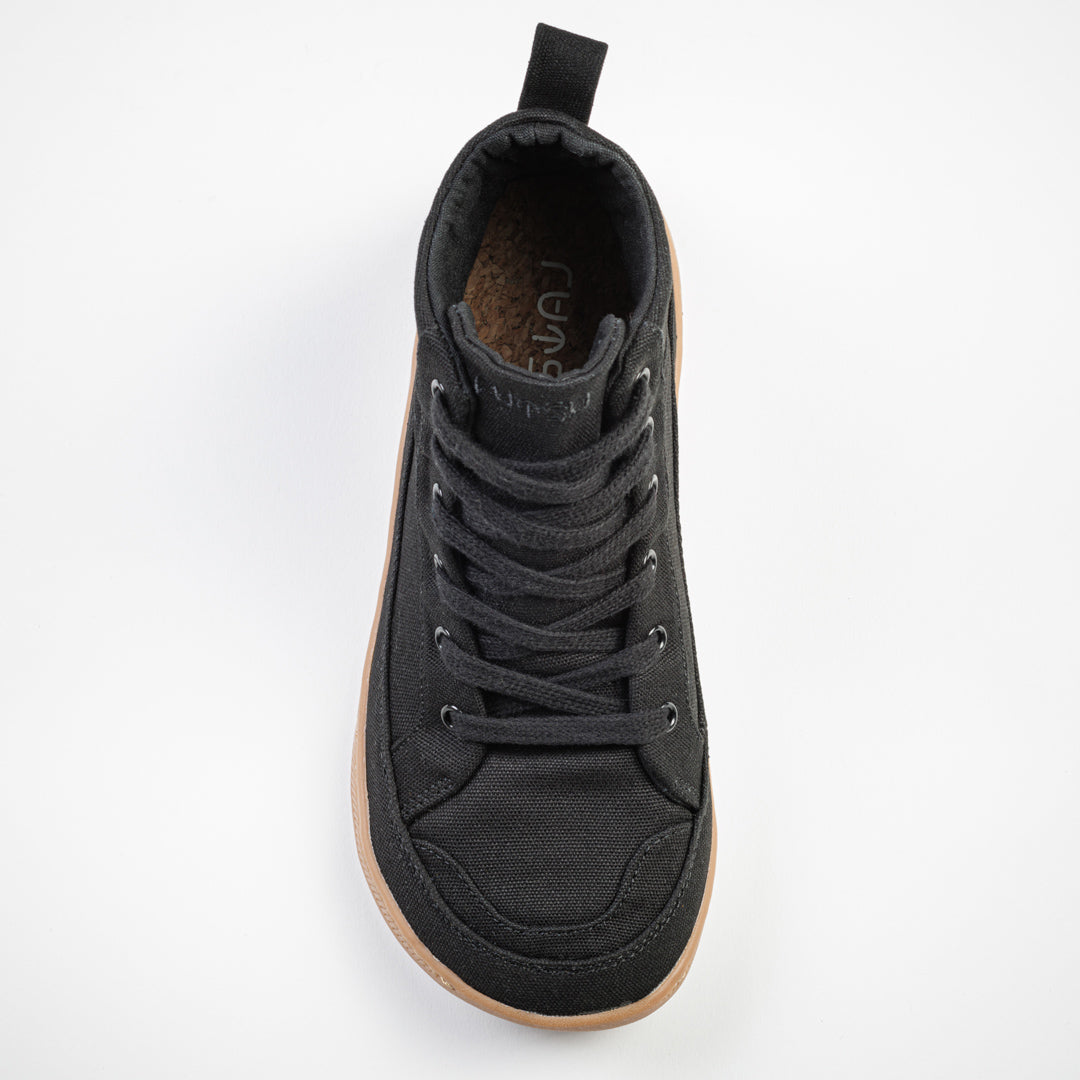
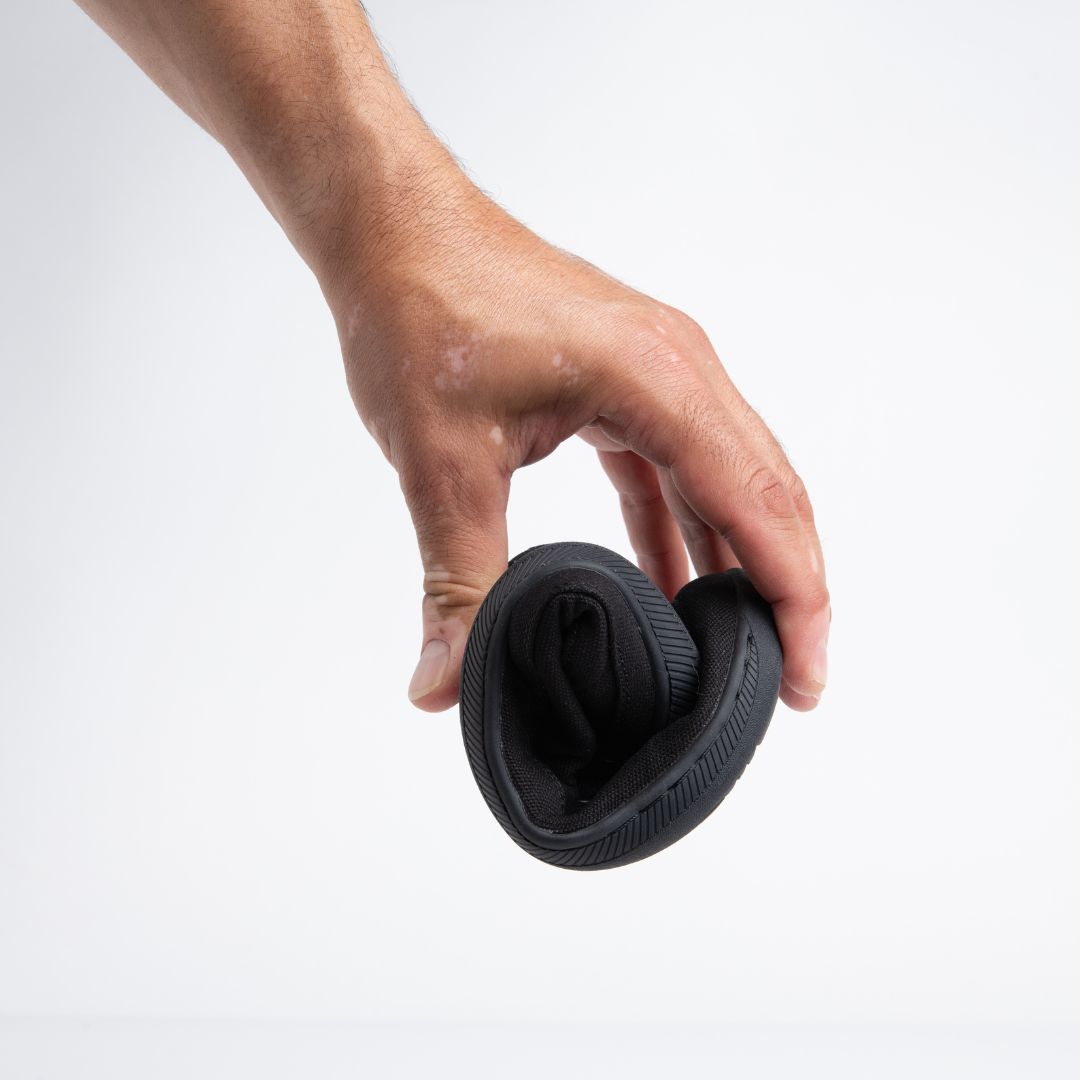
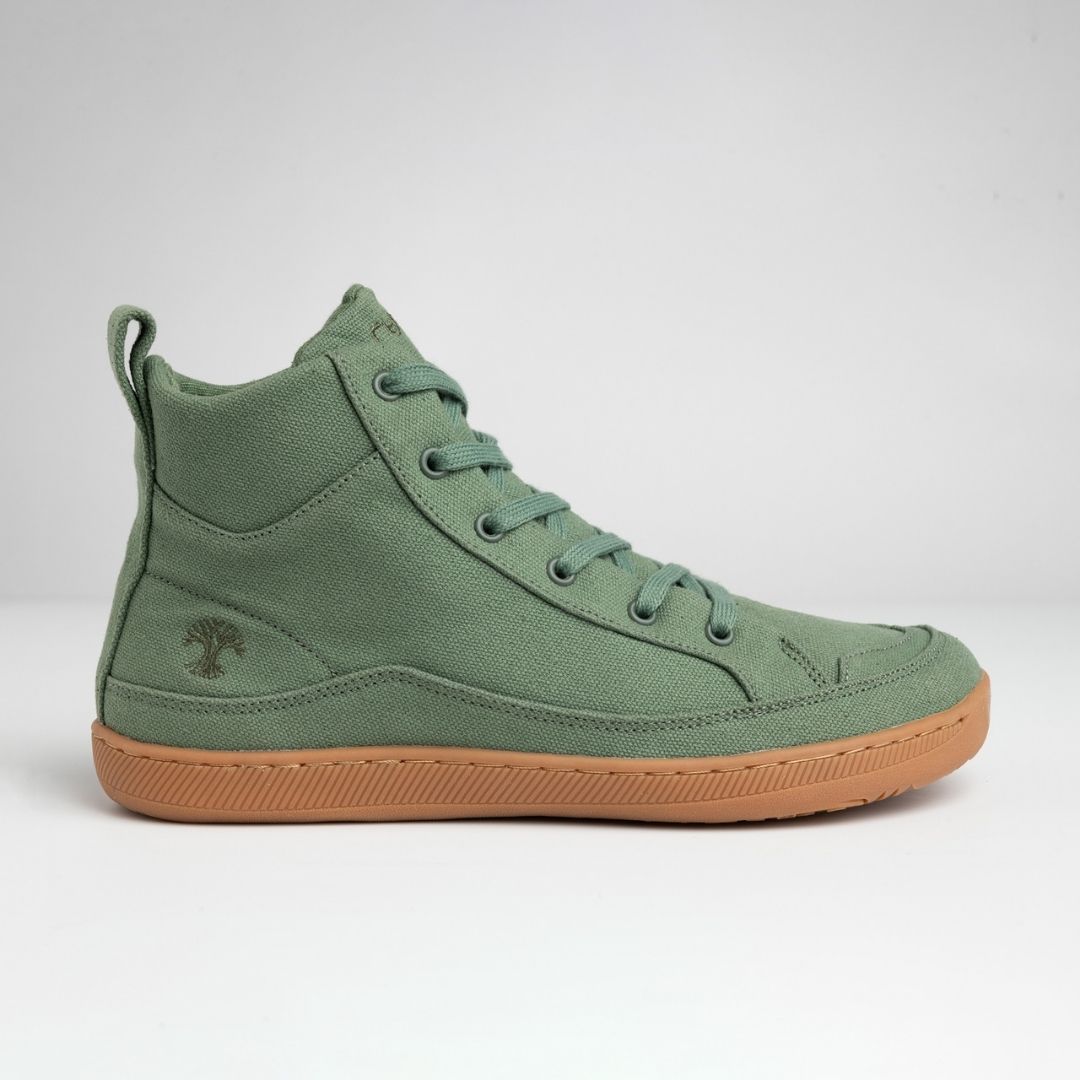
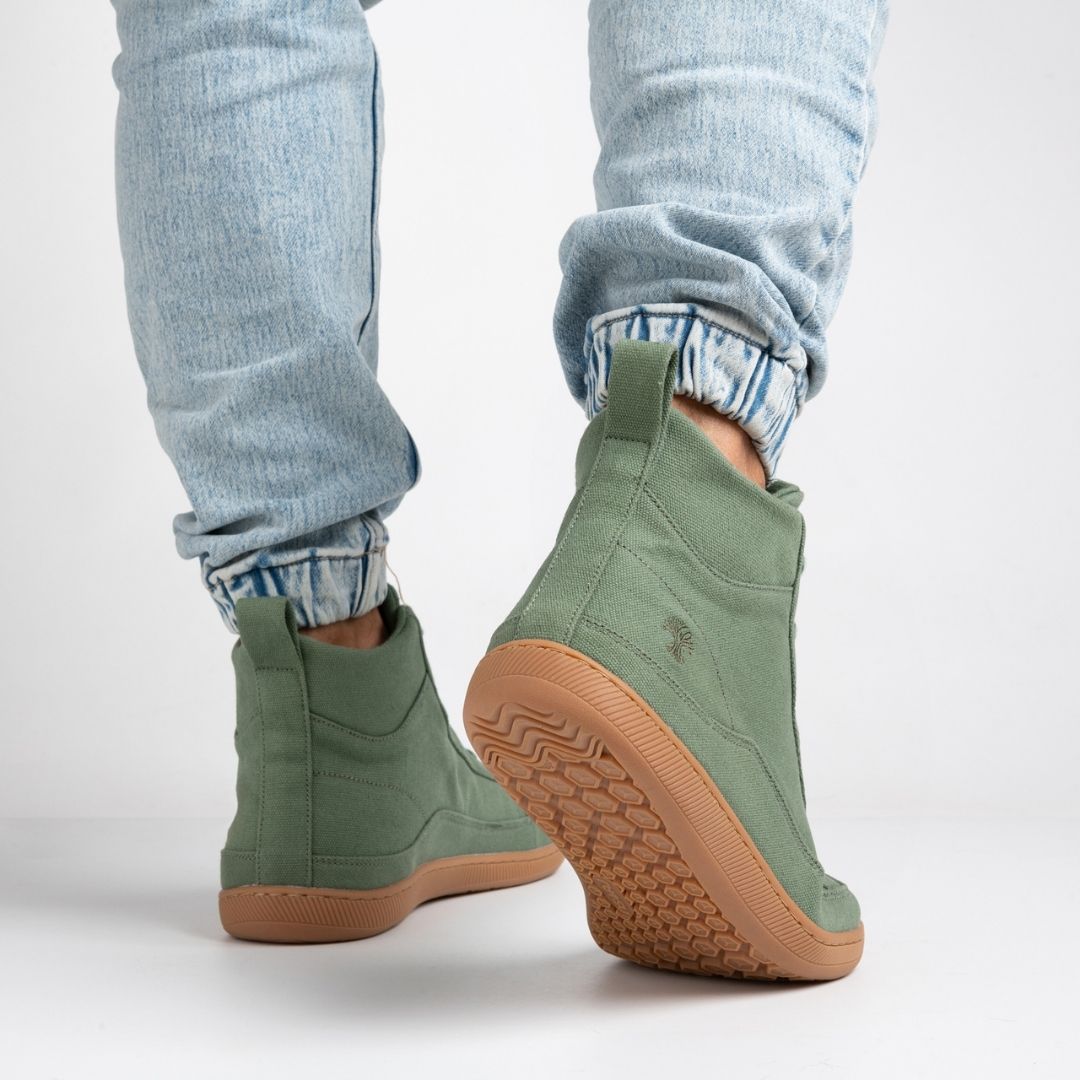
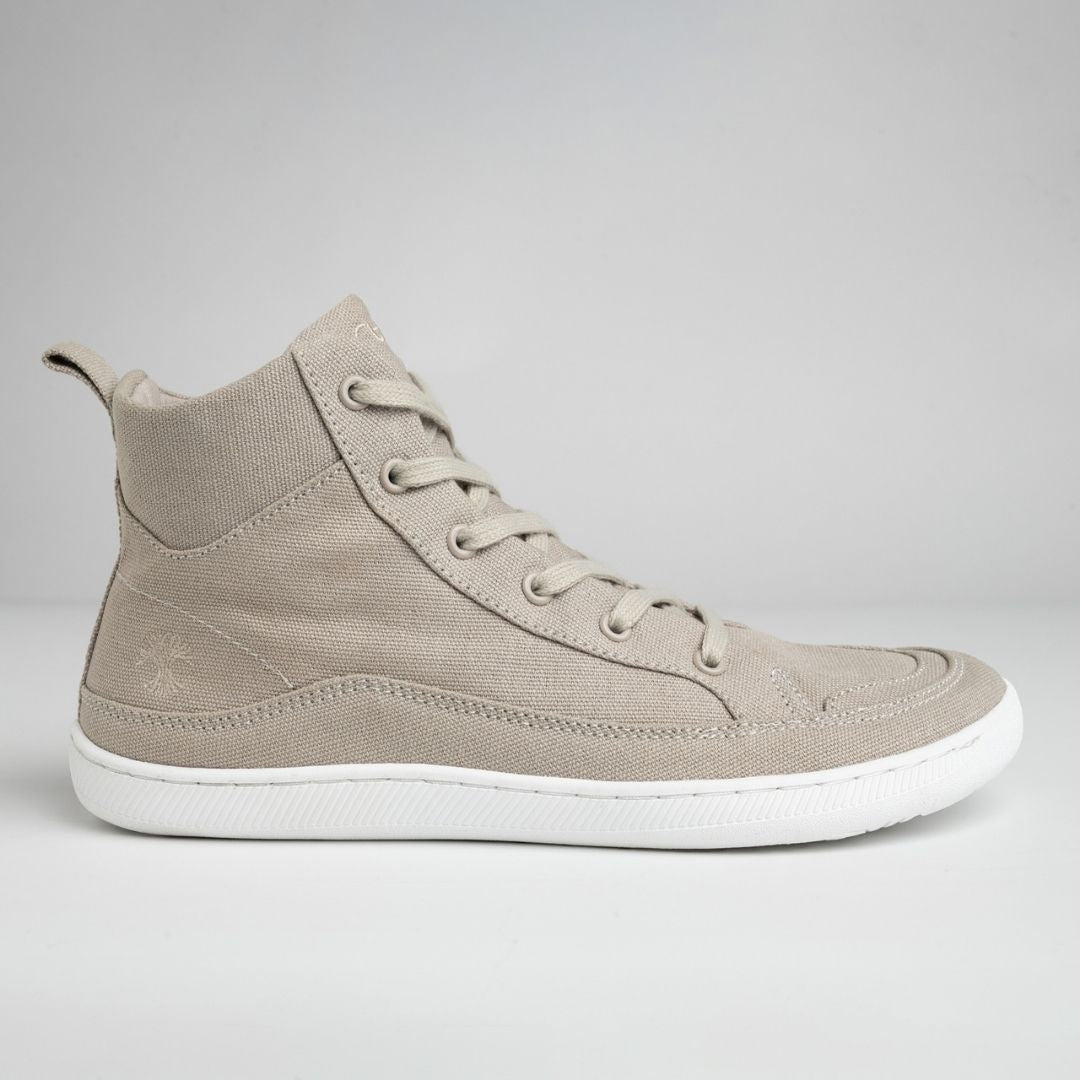
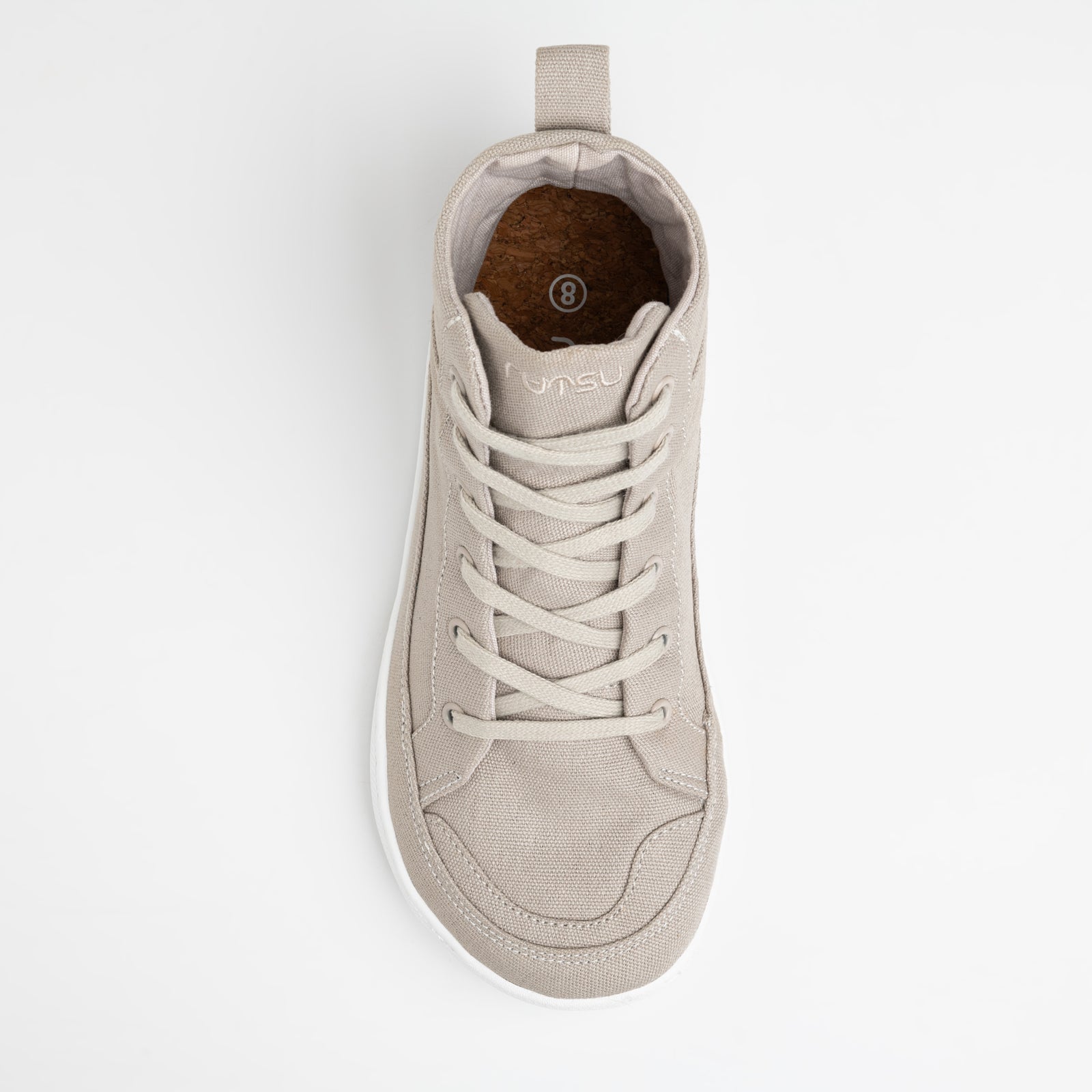
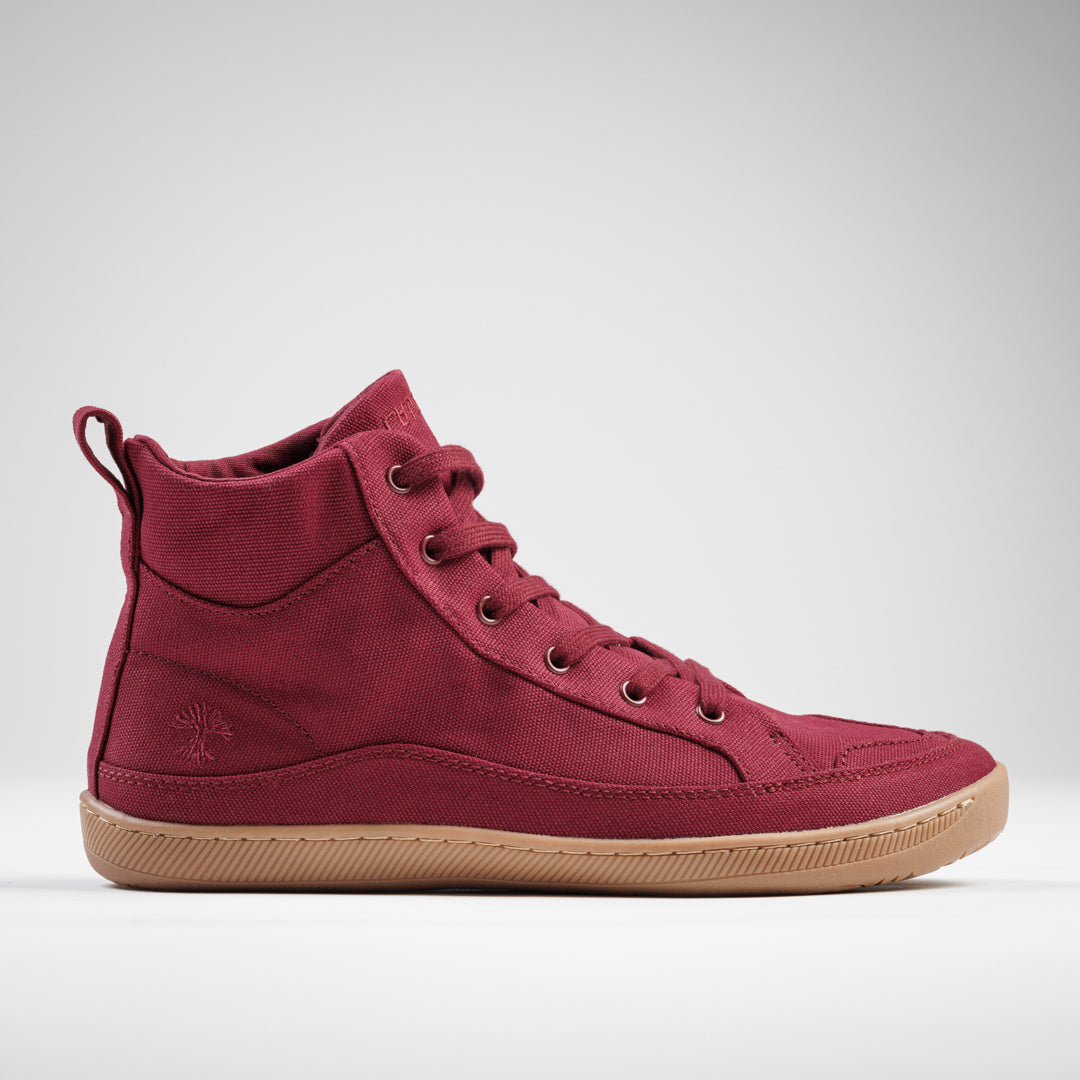
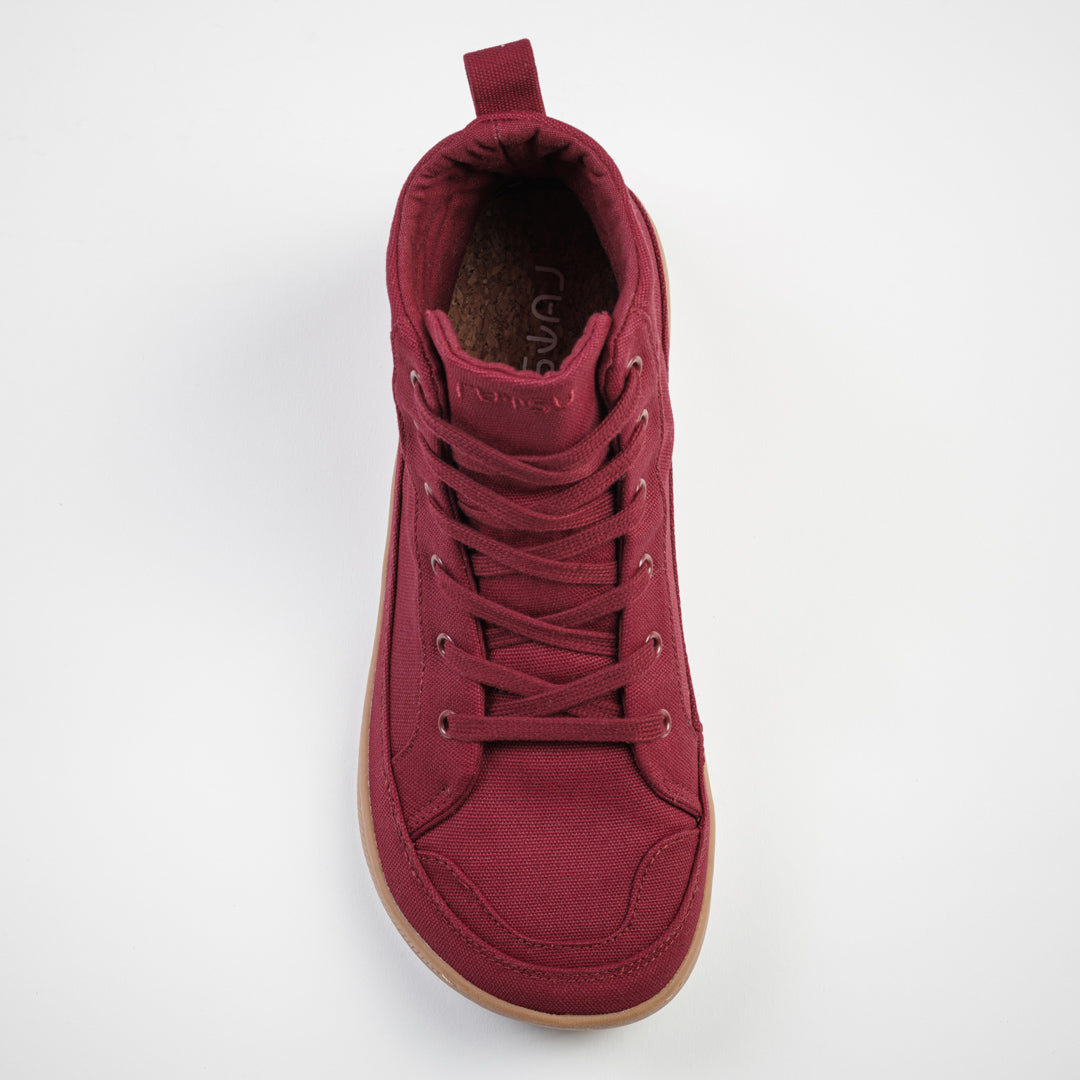
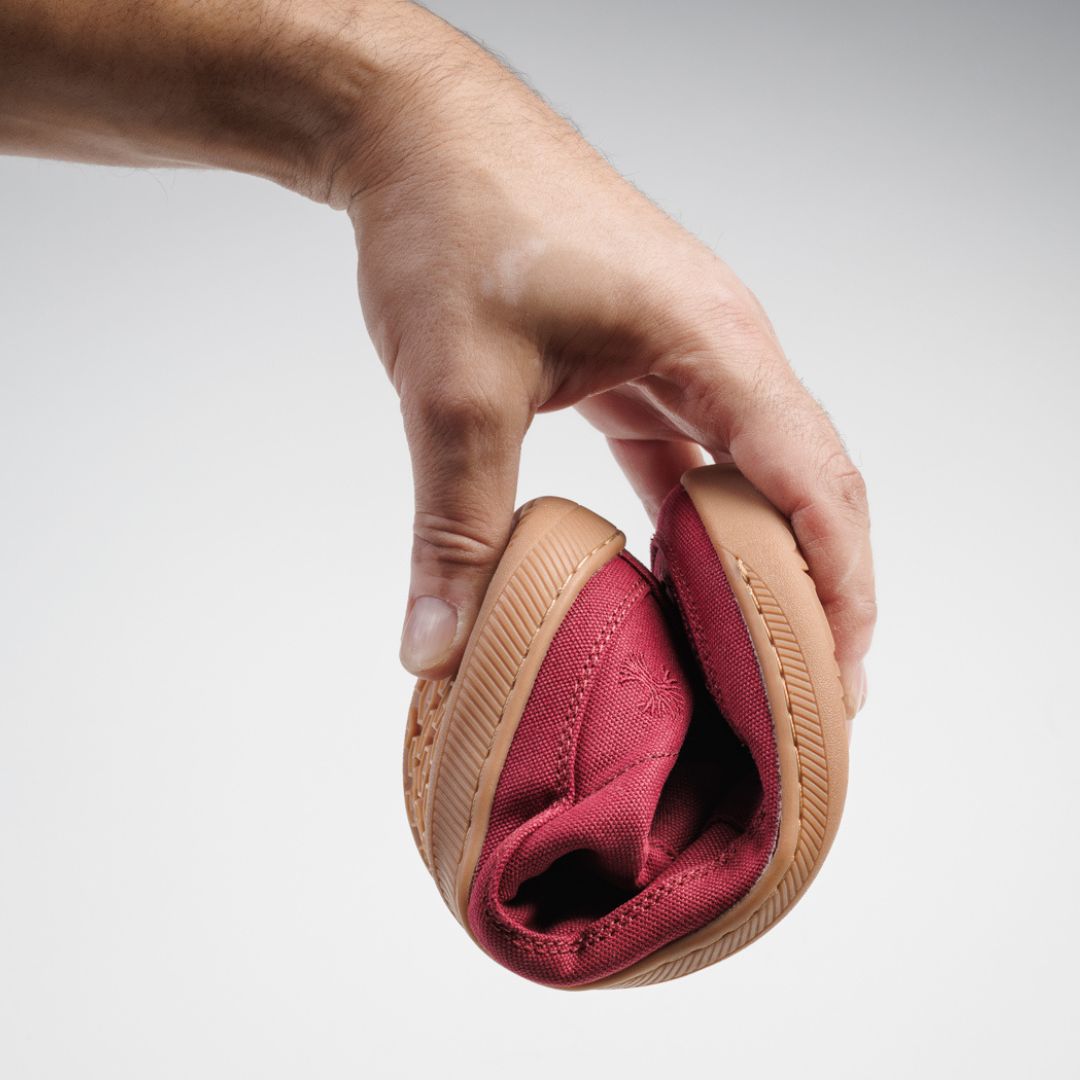
It's actually pretty specific. Four things need to be true at the same time: zero-drop sole (your heel and forefoot sit level), wide toe box (toes spread out fully), thin flexible sole (you can feel what's under you), and no arch support (the foot handles its own structure). Take away any one of those, and the shoe is just regular minimalist marketing with a trendy label.
Worth knowing, because tons of brands slap "minimalist" on shoes that still have a 6mm heel drop or a rigid midsole hiding inside. If you're curious about what defines a true barefoot shoe, check for all four. Not three. Four.
The Foot Has 26 Bones and 33 Joints, and Your Shoes Have Been Overriding All of Them
I mean, just sit with this for a second. Your foot packs 26 bones, 33 joints, and well over a hundred muscles, tendons, and ligaments into something the size of a loaf of bread. That's wild. All of it designed to grip uneven ground, absorb shock through motion, and constantly report back to your brain.
Thick-soled conventional shoes mute most of that system. Stiff structures lock the joints. Your foot, more or less, takes a nap inside the shoe.
Barefoot shoes let the foot wake back up. You still get protection from rocks and broken glass, but the rest of the foot's architecture stays active. Think of it this way: regular shoes are boxing gloves. Barefoot shoes are surgical gloves. Same hand, very different capability.
How Barefoot Shoes Rewire Your Walking Gait, From Heel Strike to Midfoot Landing
Go watch someone in chunky sneakers walk across a parking lot. See that aggressive heel strike? The big padded heel basically invites it. Leg swings forward, heel crashes down, foam absorbs the hit.
Try that in barefoot shoes and your body figures things out surprisingly fast. Without cushion to bail you out, you'll shift to a midfoot or forefoot landing almost automatically. Shorter stride. Quicker steps. And your knees, the ones that ache after long walks? Less impact rattling up the chain.
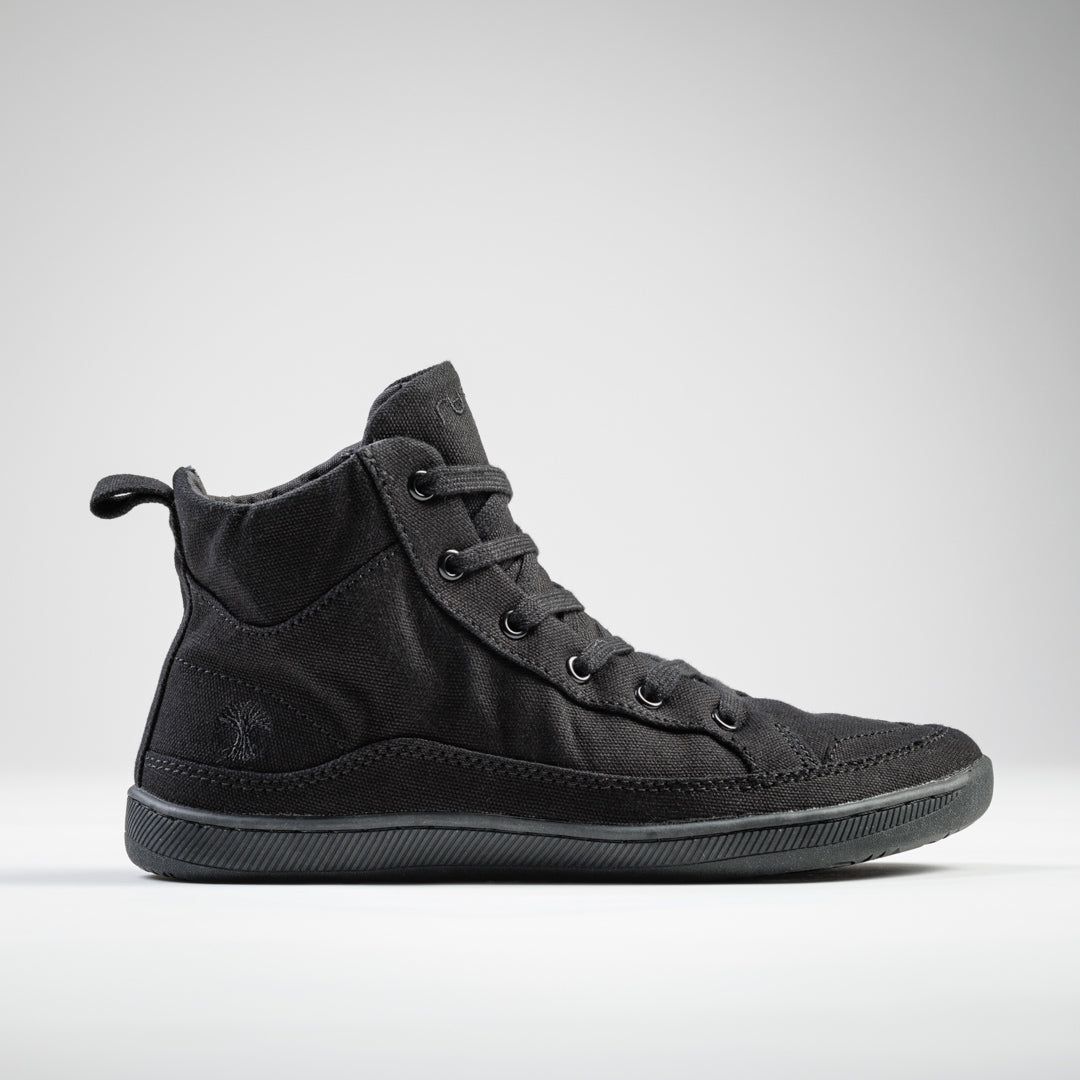
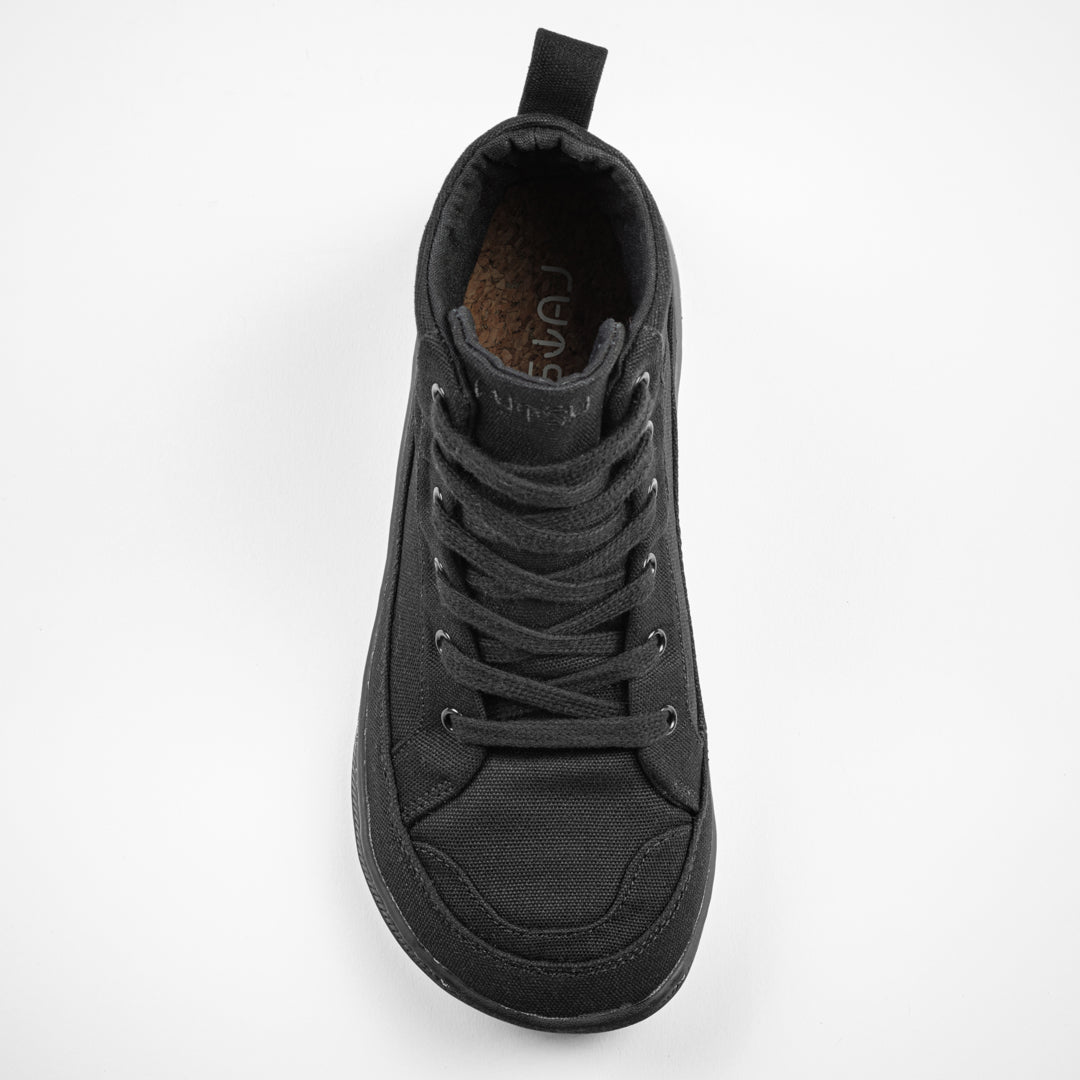
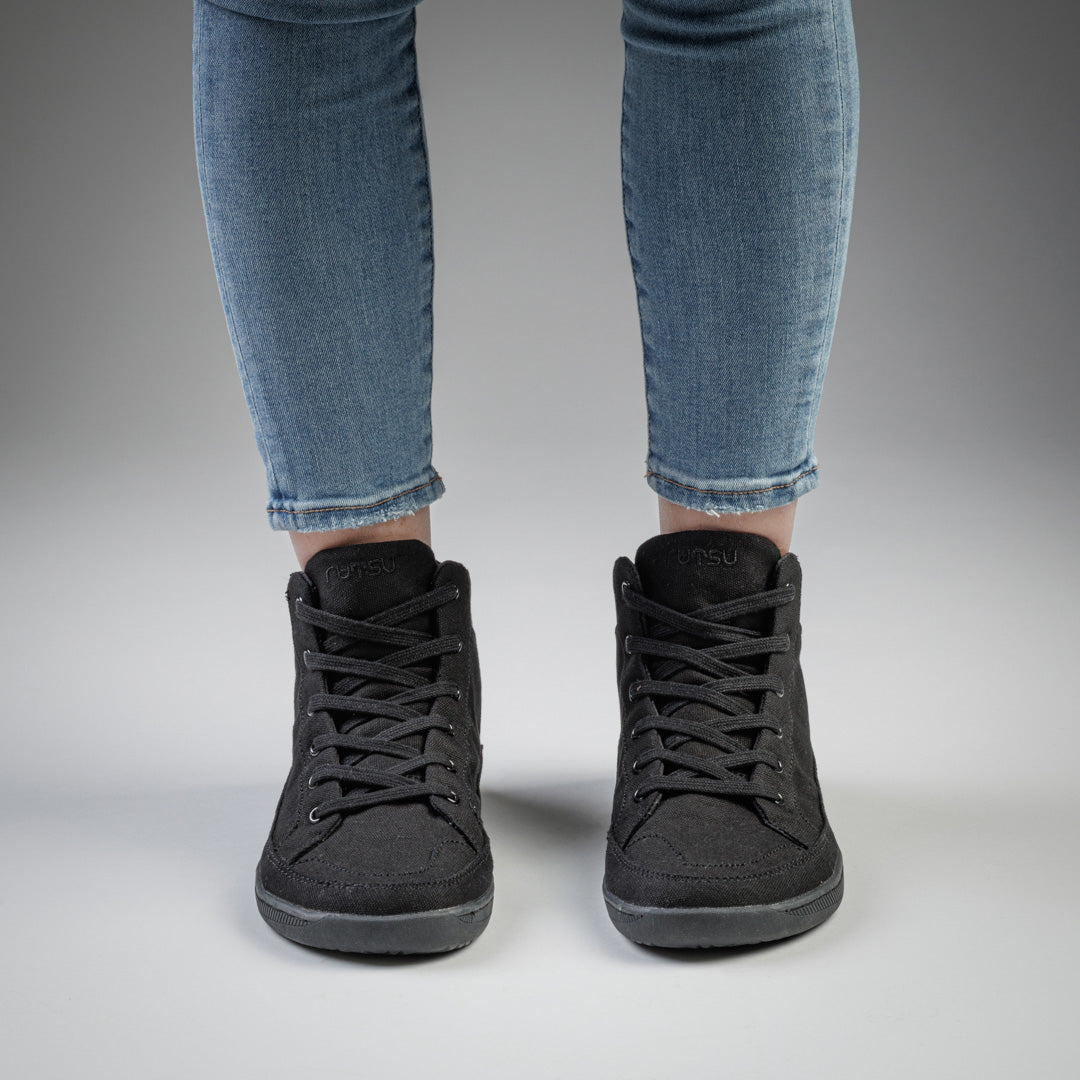
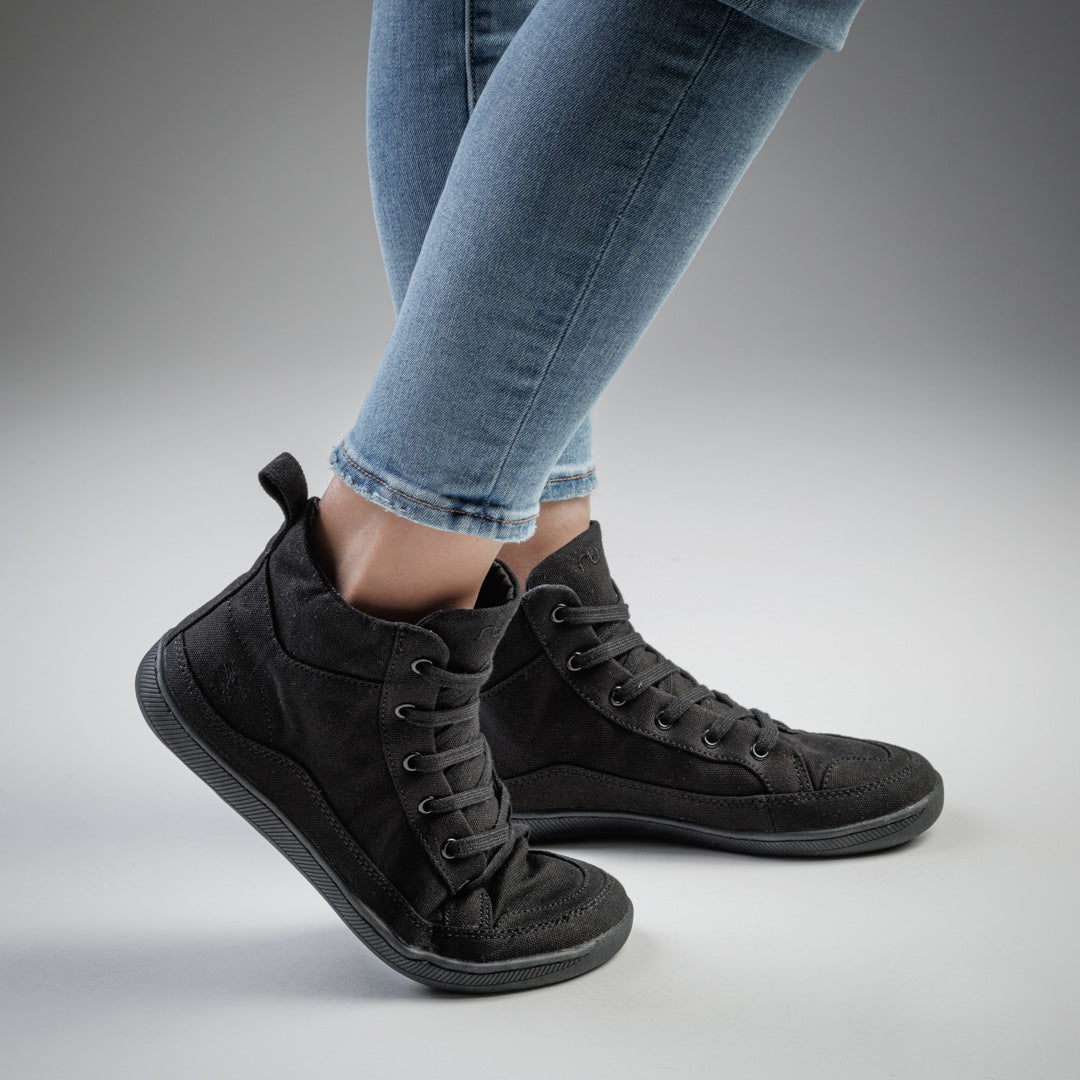
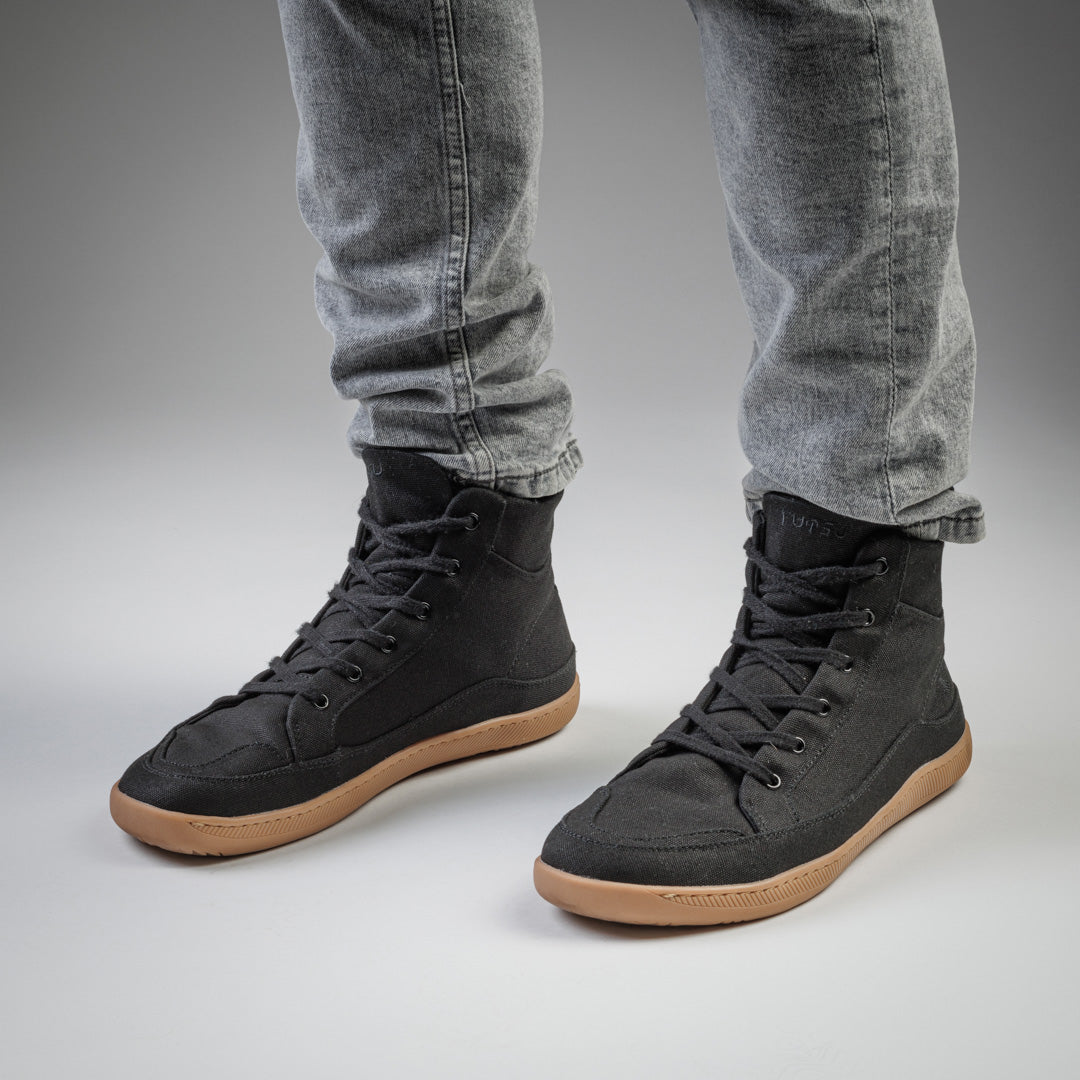
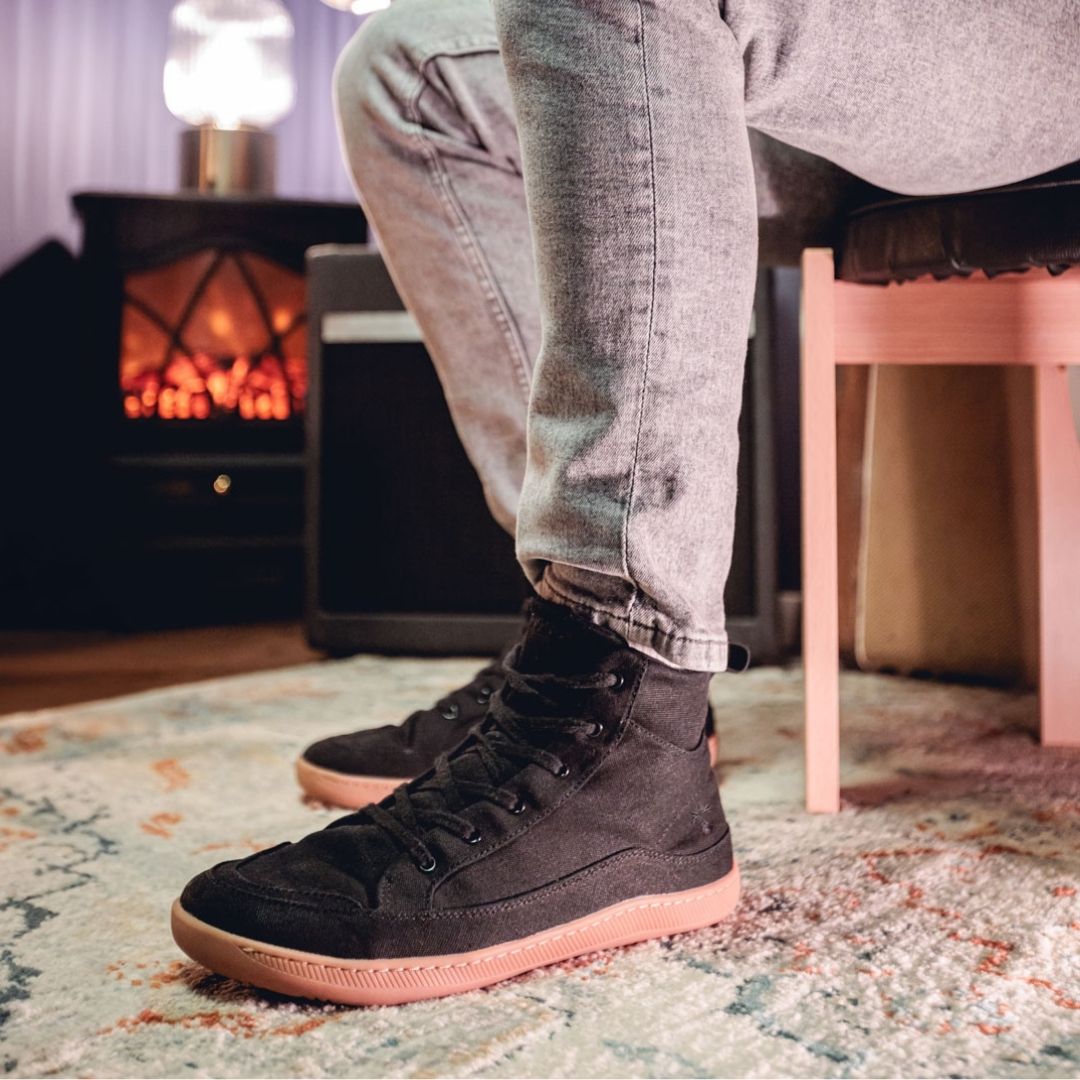
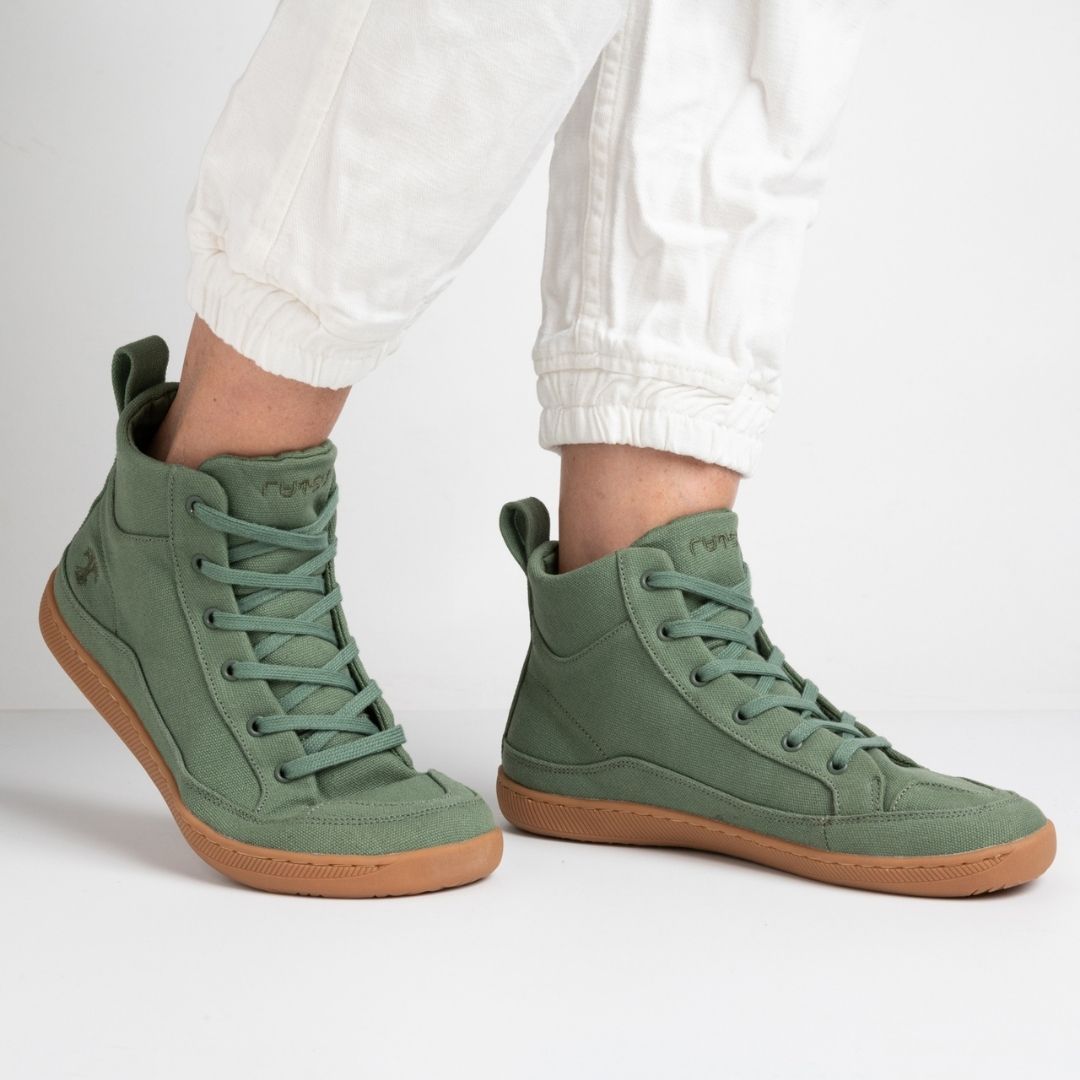
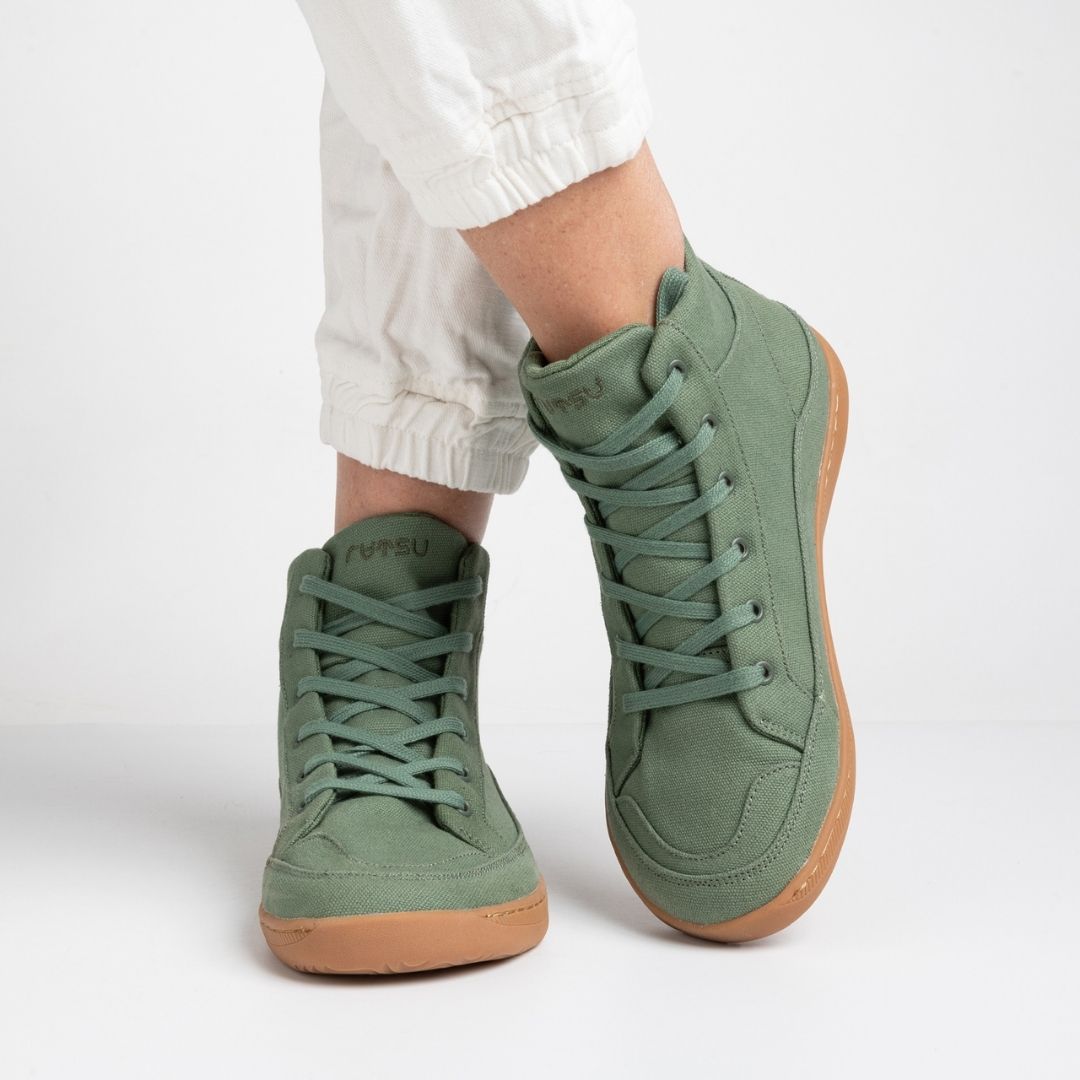
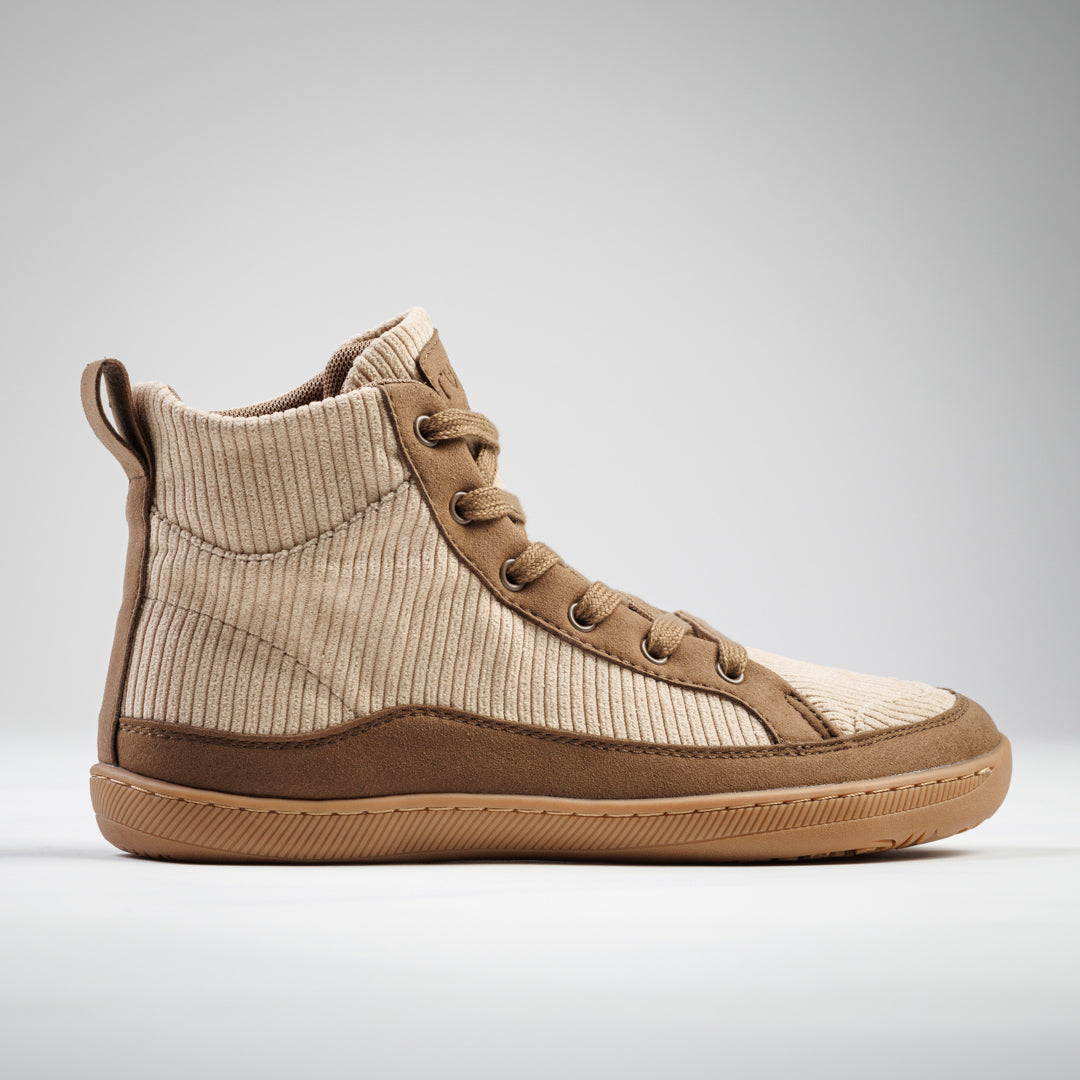
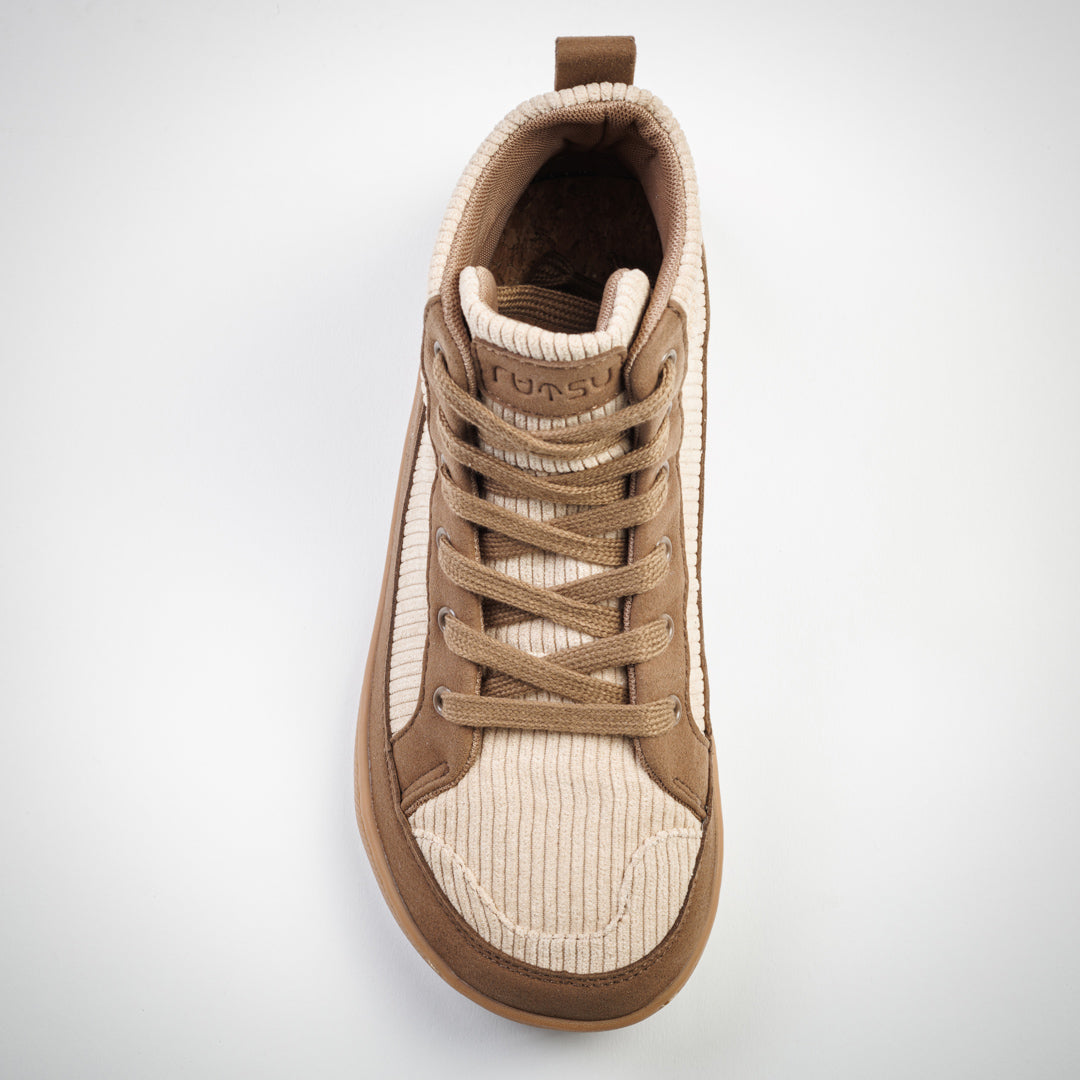
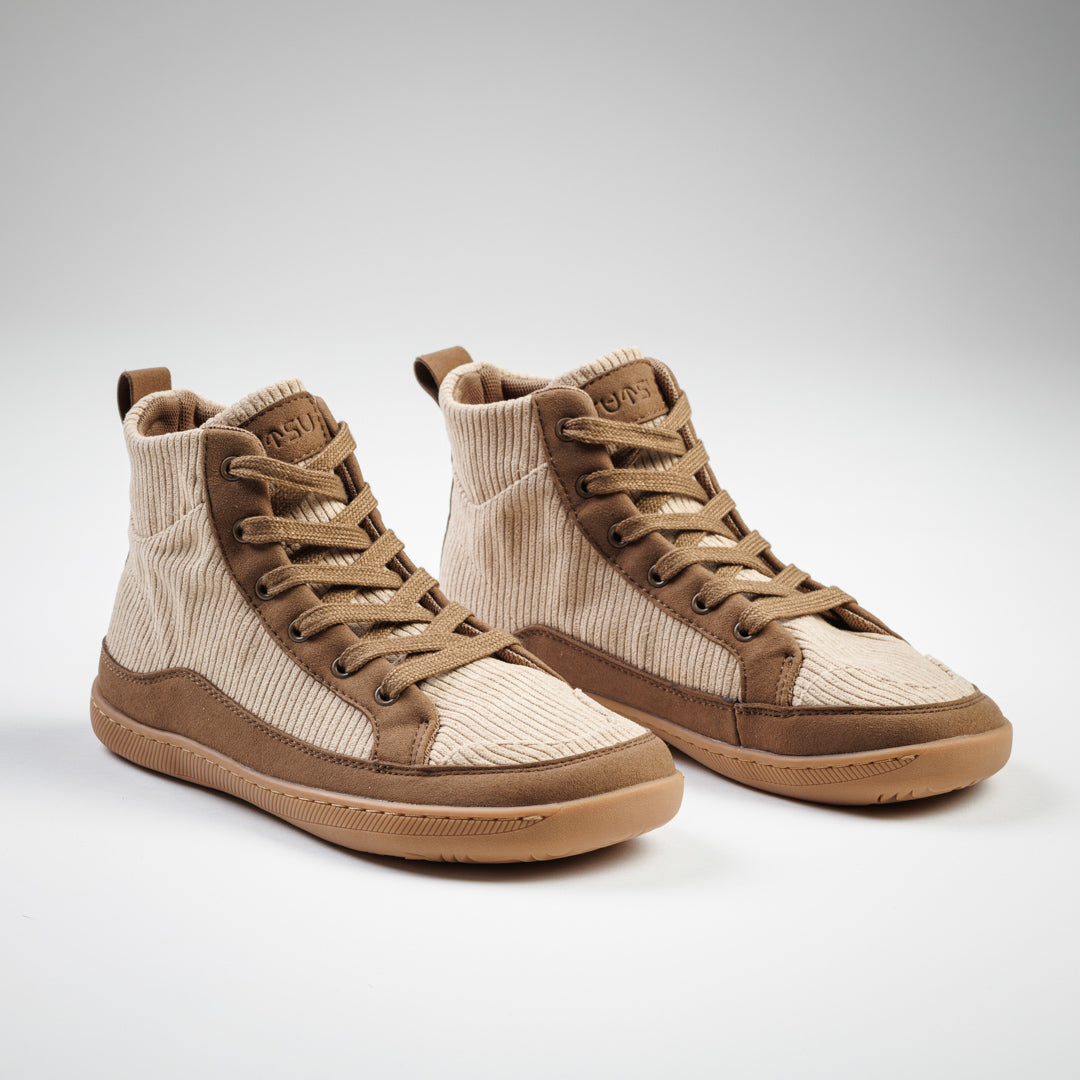
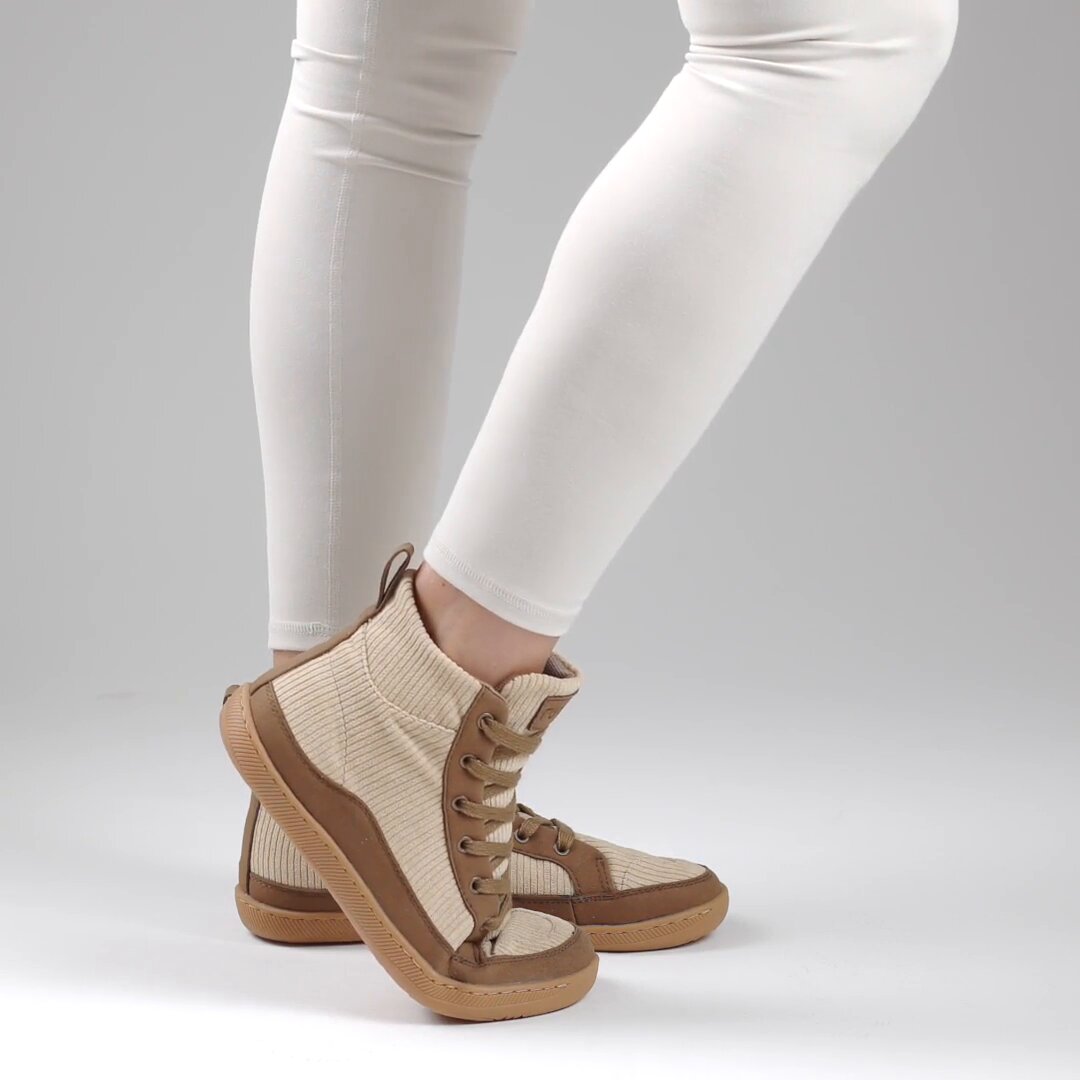
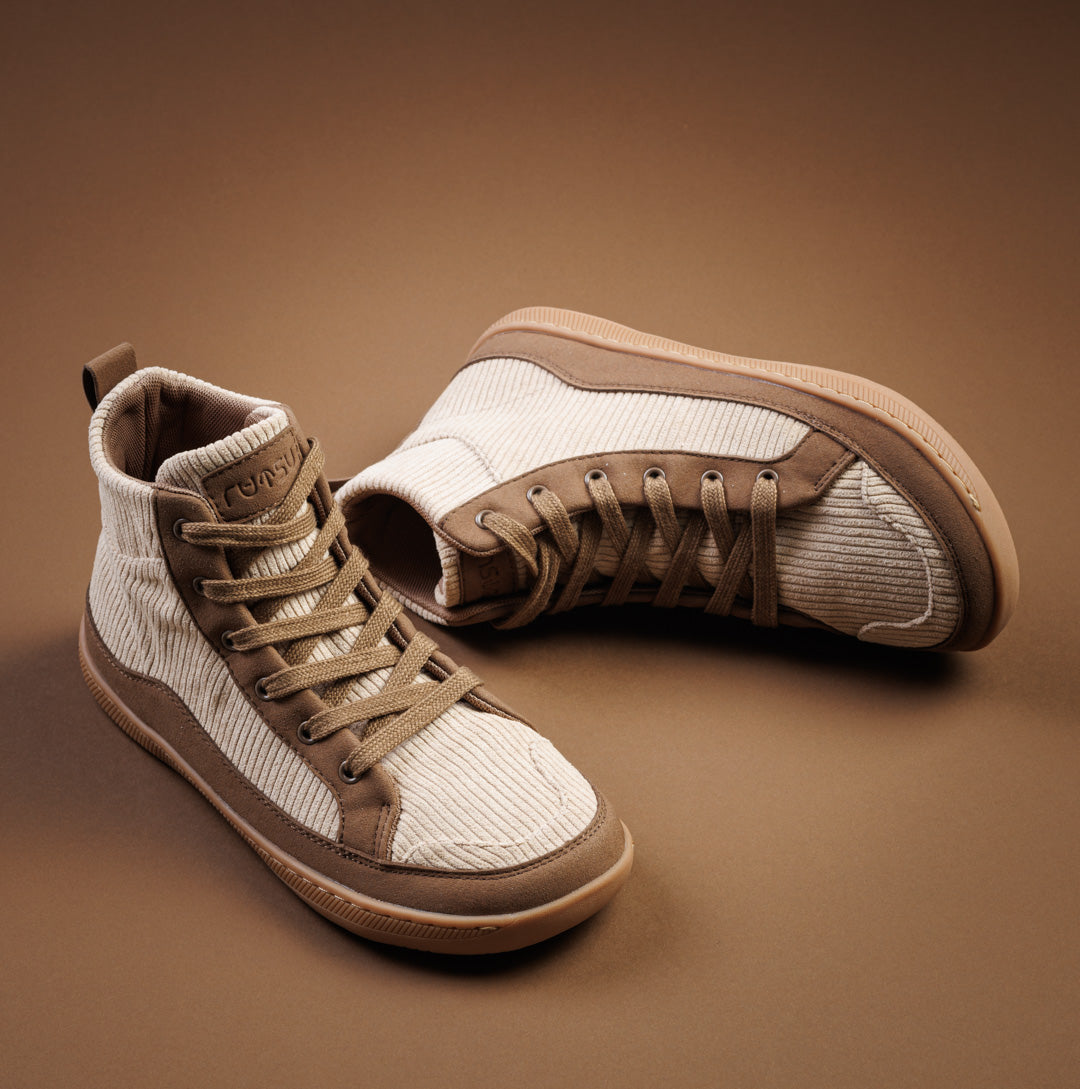
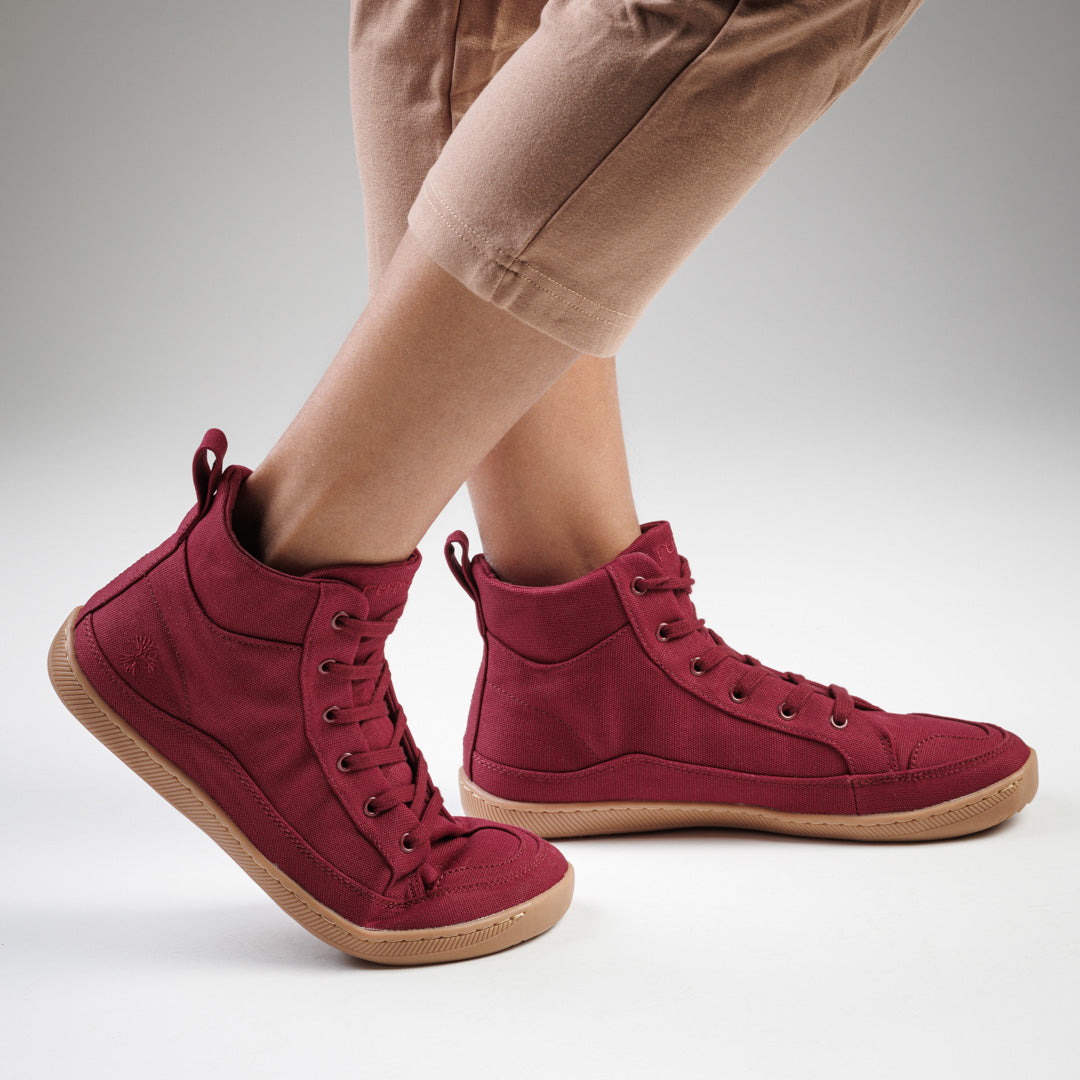
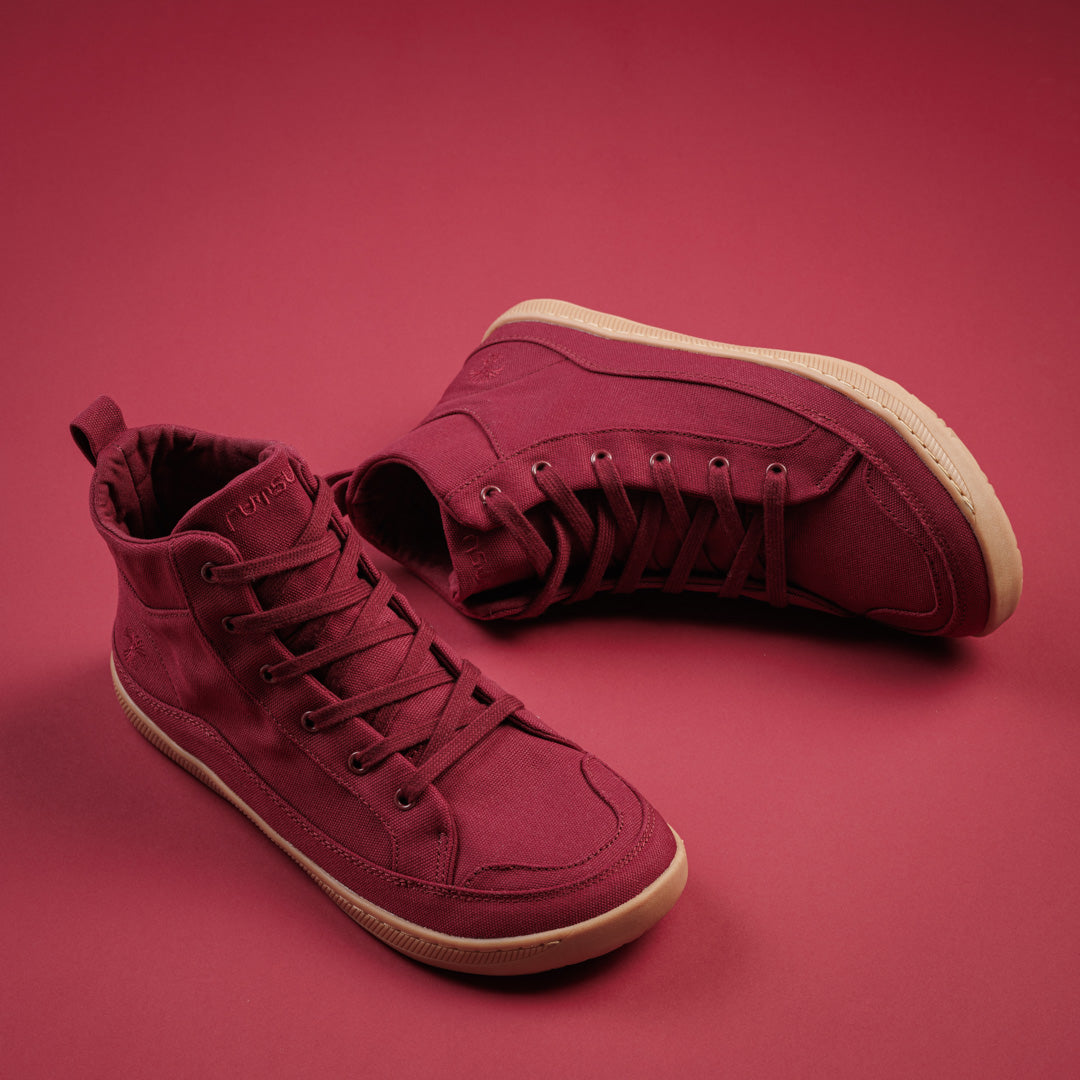
Rutsu Barefoot builds their low-top barefoot shoes built for walking around this exact shift. Flexible soles. Room for your toes. Your foot lands how it was always supposed to.
Running in Barefoot Shoes: What Changes in Stride, Cadence, and Impact Forces
Runners feel the difference more than anyone. A 2012 study in Medicine & Science in Sports & Exercise showed that habitual barefoot runners experienced about 50% lower collision forces than heel-strikers in conventional shoes. Fifty percent. That's not a rounding error.
Real talk, though? Those first few runs are humbling. Your calves will scream. Stride length drops 5-10%. Cadence picks up by 8-12 steps per minute. Don't panic. None of that is a problem. That's recalibration.
Patience matters more than mileage here. Keep the distances short at first. Your tendons need weeks to catch up to what your brain already figured out on run number one.
Standing All Day: Why Posture, Arches, and Lower Back Tension Shift With Zero Drop
Got a job that keeps you on your feet eight hours straight? Pay attention to this part.
Standard work shoes with a raised heel push your weight onto the balls of your feet. Your lower back picks up the slack by arching harder than it should. End of shift? You feel every minute of it in your spine.
Zero-drop changes the math. Weight spreads across your whole foot. Ankles stack under knees, knees under hips, hips under spine. Your skeleton does the holding instead of your muscles white-knuckling through the afternoon.
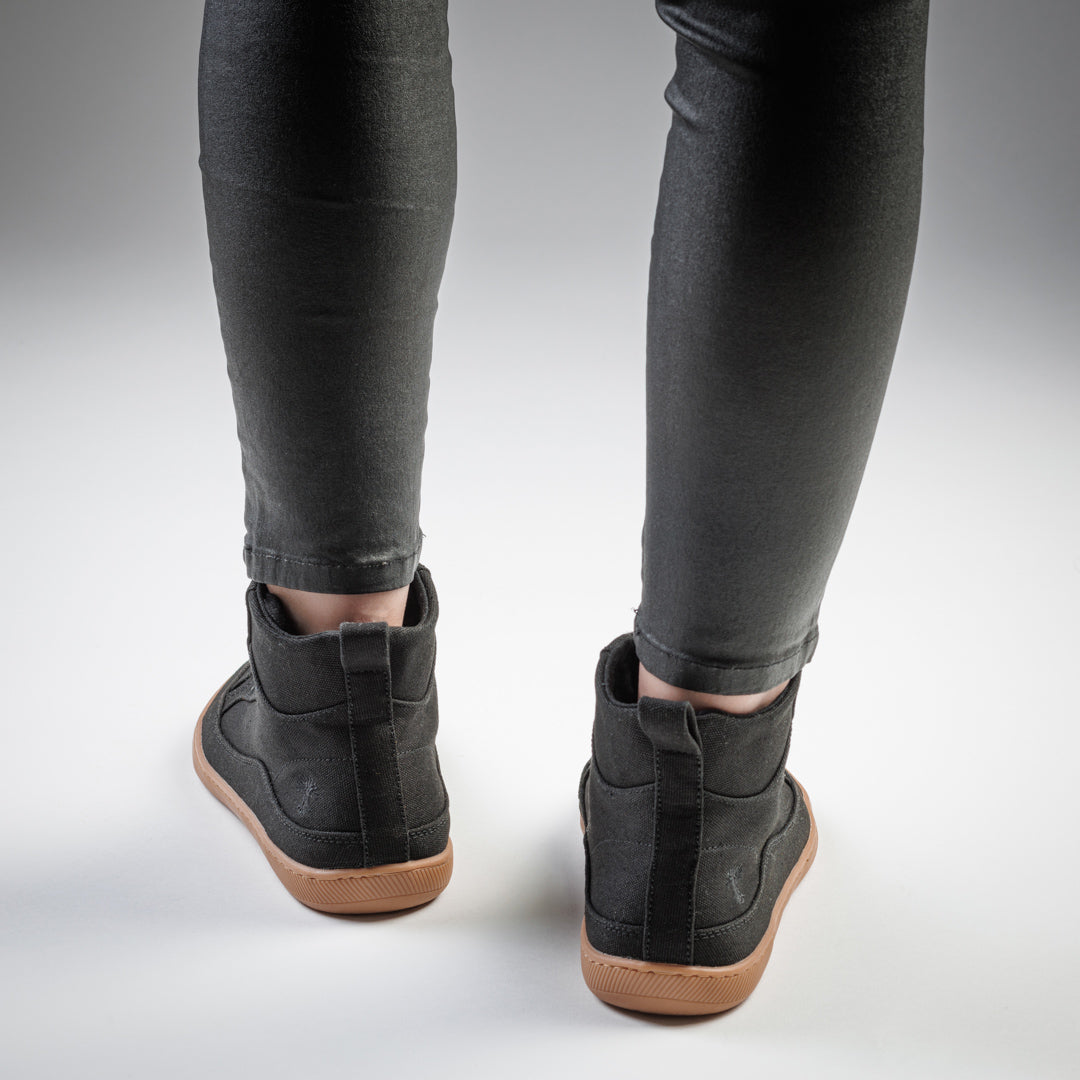
Rutsu Barefoot makes barefoot work shoes for hours on your feet that pair zero-drop design with the kind of durability that survives a real workday. Not a stroll to the coffee shop. An actual shift.
Proprioception and the Brain-to-Foot Connection You Forgot You Had
Quick vocabulary word you'll actually care about: proprioception. It's how your body senses where it is in space. Your feet are packed with nerve endings that power this system, and thick soles basically put them on mute.
Watch a toddler on grass sometime. Toes gripping, tiny adjustments, constant balancing without thinking. That's proprioception doing its thing. Adults can get that back.
In barefoot shoes, ground data floods in again. Texture. Slope. Whether the sidewalk is wet. Balance gets sharper. Fall risk drops. (For older adults, that last one is a big deal. Bigger than most people realize.)
The First 30 Days of Transition: What's Normal, What's a Warning Sign, and How to Pace It
Week one is going to feel like you did a calf workout you didn't sign up for. Sore arches, tired feet, maybe some mild cramping. All normal.
By week two or three, the soreness backs off. You start noticing textures underfoot you never paid attention to before. Your toes actually begin to spread apart a little. Weird, but in a good way.
Week four? You put on your old shoes and they feel like ski boots.
Now, warning signs. Sharp pain in your heel or the ball of your foot is not "just adjustment." Pain that worsens over days rather than improving is a red flag. Swelling in any joint? Stop. These mean you pushed too hard, too fast. Pull back. Alternate with regular shoes. Let your body set the pace, not your enthusiasm.
Who Should (and Shouldn't) Make the Switch, and How to Know Which Camp You're In
Honestly, most healthy adults can do this. Runners, office workers, parents chasing kids at the playground. The benefits cast a wide net.
But some people need to pump the brakes. Active stress fractures, serious neuropathy, advanced rheumatoid arthritis in the feet, or recent foot surgery all mean you should check with a podiatrist before ditching your current shoes. No article on the internet should override medical advice. (Including this one.)
Where does that leave most of you? The "yes, but take your time" category. Your feet have been on autopilot inside restrictive shoes for twenty, thirty, maybe forty years. Waking them up is a process, not a switch you flip.
So, why barefoot shoes? Because your feet already know how to walk, run, and stand. They've just been waiting for shoes that stop doing the job for them. If you're ready to see what that feels like, Rutsu Barefoot's full collection is a good starting point.
FAQs
Will barefoot shoes fix my plantar fasciitis, or could they make it worse?
Depends on the root cause. A lot of plantar fasciitis cases trace back to weak foot muscles, and barefoot shoes can help rebuild that strength over months. But if you jump in too aggressively, you risk flaring up already-inflamed tissue. Go slow, and a physical therapist can help you get the pacing right.
Are barefoot shoes safe for people with flat feet, fallen arches, or overpronation?
Usually, yes. Flat doesn't automatically mean weak. Many people with low arches actually see gains as their intrinsic foot muscles start working harder. If flat feet cause you chronic pain, though, loop in a professional before making the swap.
How long does it take to fully transition to barefoot shoes without getting injured?
Expect 4 to 12 weeks if you're patient about it. Start with 30 to 60 minutes a day and build from there. Most transition injuries come down to one thing: rushing.
Can I wear barefoot shoes all day, or should I rotate them with regular shoes at first?
Rotate. Wear them a few hours, then swap back to your regulars. After about 4 to 8 weeks, once your feet feel solid and consistent, start extending wear time.
Do barefoot shoes really strengthen foot muscles, or is that a marketing claim?
Science says yes. A 2019 study in Scientific Reports found that wearing minimal footwear actually increased foot muscle size and strength over several months. Not a brand claim. Peer-reviewed research.
Are barefoot shoes appropriate for runners over 40 or for people carrying extra weight?
Absolutely, just with more caution. More body weight means more load per step, and older connective tissue needs extra recovery time. Start by walking in them before running. Your body will tell you when it's ready for more.